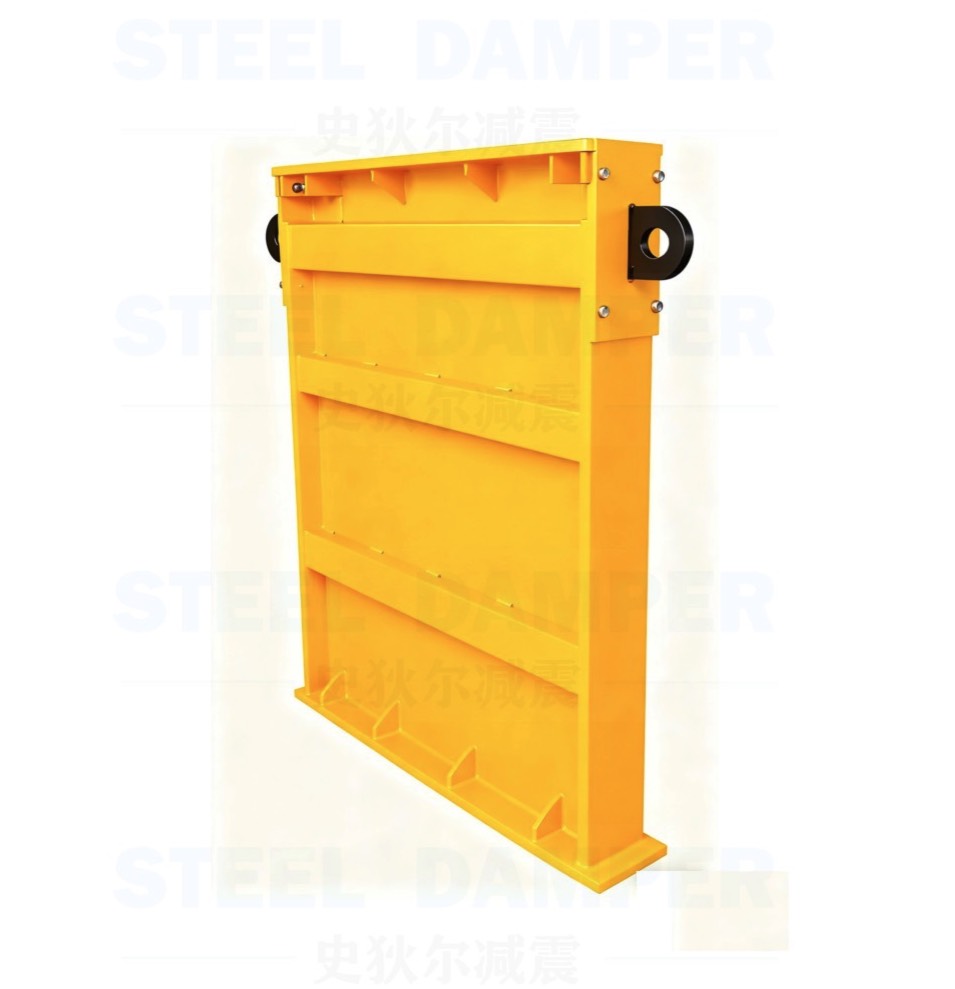
VFW Introduction
A velocity-dependent damper generally composed of inner steel plates, outer steel plates, and viscous liquid, available as single-plate and double-plate forms.
VFW Introduction 2
The built-in liquid provides no calculable stiffness, so it does not affect the structural period and mode shapes before dampers are added.
VFW Introduction 3
Its elliptical hysteresis ensures force is zero at maximum displacement and displacement is zero at maximum force. It can reduce both structural force and displacement response and can be repeatedly used under earthquakes and strong winds.
Damping Principle
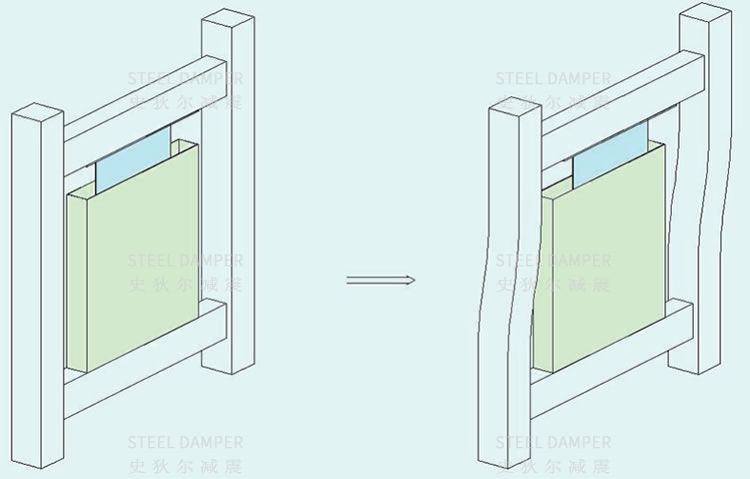
The inner plate is fixed to the upper floor and the outer plates to the lower floor. Wind or earthquake action creates relative velocity between floors, producing velocity gradients in the viscous material and increasing structural damping.
Damping Principle 2
Product tests show full and stable hysteresis curves and good energy-dissipation performance.