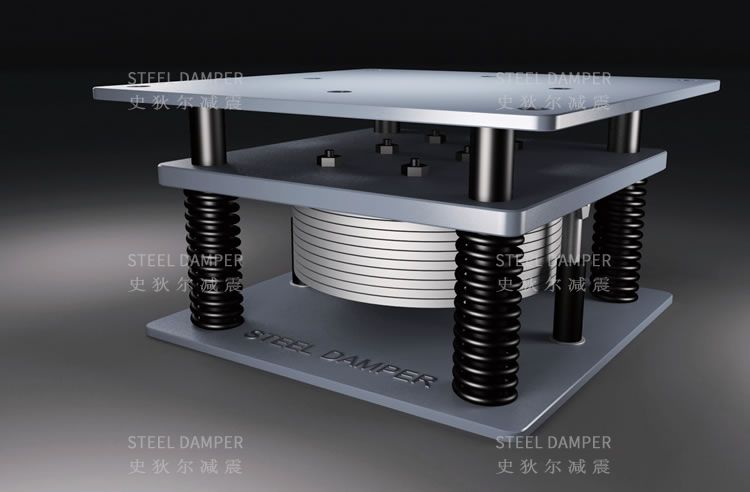
TMD Introduction
A vibration-control system mainly composed of springs, dampers, and a mass block, supported or suspended on the structure. It can be configured for vertical or horizontal vibration control.
TMD Introduction 2
Steel Damper TMD products can use viscous dampers or permanent-magnet eddy-current dampers according to customer requirements.
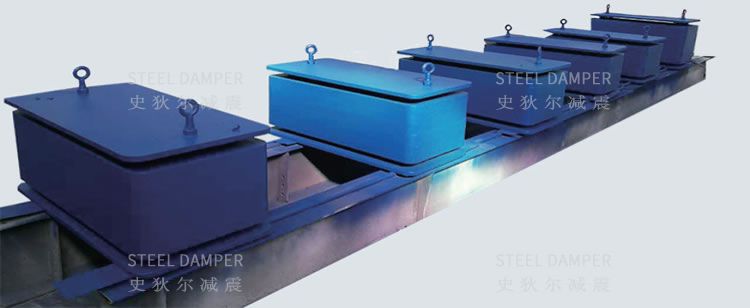
TMD Introduction 3
Eddy-current TMD offers non-contact damping, no friction, no leakage, no later maintenance, good velocity-linearity, temperature-stable parameters, and durable all-metal components.
TMD Introduction 4
TMD model names include product name, classification code, mass weight, and vibration frequency. CT denotes conventional viscous-damper TMD, and EC denotes eddy-current TMD.
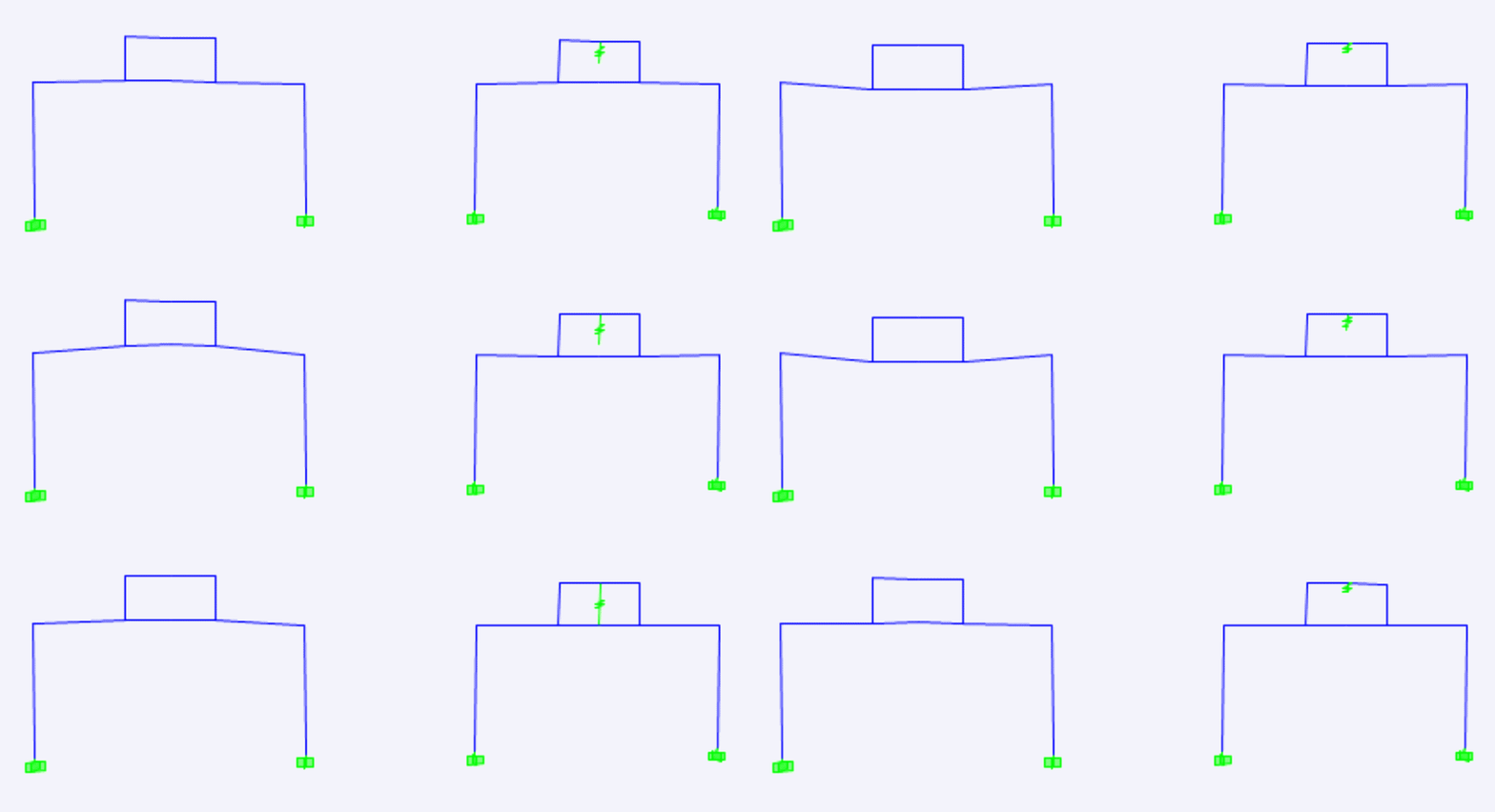
Working Principle
When the main structure vibrates under external excitation, the TMD moves with it. The inertial force generated by the TMD acts back on the main structure and is tuned opposite to the excitation force, reducing displacement, velocity, and acceleration.
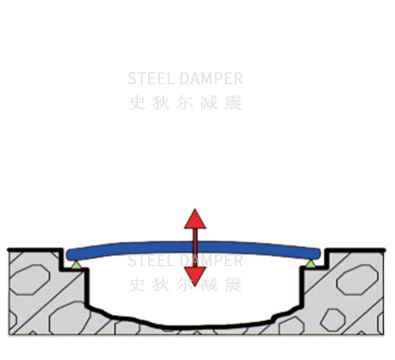
Applications
For bridges, long-span structures, and large cantilevers, TMD is an effective method for improving vibration comfort.
Applications 2
For high-rise and tall structures, TMD is an effective wind-resistance measure.
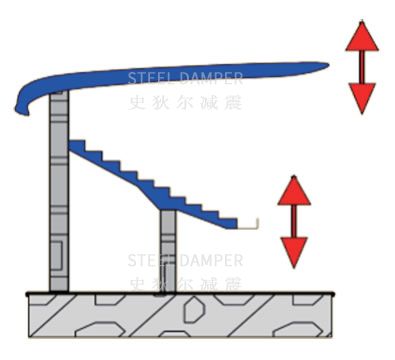
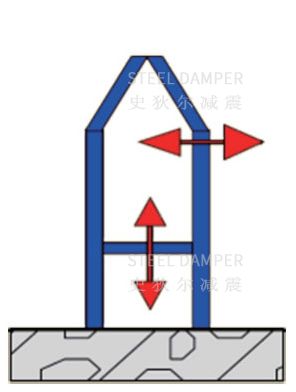
Applications 3
A vibration-control system mainly composed of springs, dampers, and a mass block, supported or suspended on the structure. It can be configured for vertical or horizontal vibration control.
Applications 4
A vibration-control system mainly composed of springs, dampers, and a mass block, supported or suspended on the structure. It can be configured for vertical or horizontal vibration control.
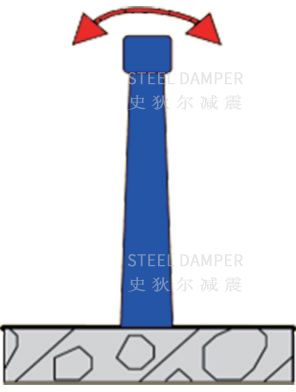
Applications Reference Images
Connection Type
TMD connection and support forms are designed according to installation space, vibration direction, mass block layout, and maintenance requirements.